
CLIMATE CHANGE: A CHALLENGE TO BORDEAUX
INTRODUCTION
For several weeks, I’ve intended to write about how Bordeaux winemakers are responding to climate change. I didn’t expect to do so amid an enormous wildfire. Beginning in the coastal area west of Bordeaux, the fire has spread toward the city, forcing evacuations in outlying suburbs including Eysines, Le Taillan and Mérignac, where the airport is located. According to a variety of government reports this summer, more than 220,000 people were at one time or another evacuated, and over 100,000 acres – nearly 160 square miles – have burned. France has not experienced a wildfire on this scale since before World War II, and perhaps not even before. Exceptionally hot and dry conditions have left the region a tinder box: according to Creusot Infos, just 1.9 inches of rain fell in Pauillac in June and July, compared with a typical 4.9 inches.
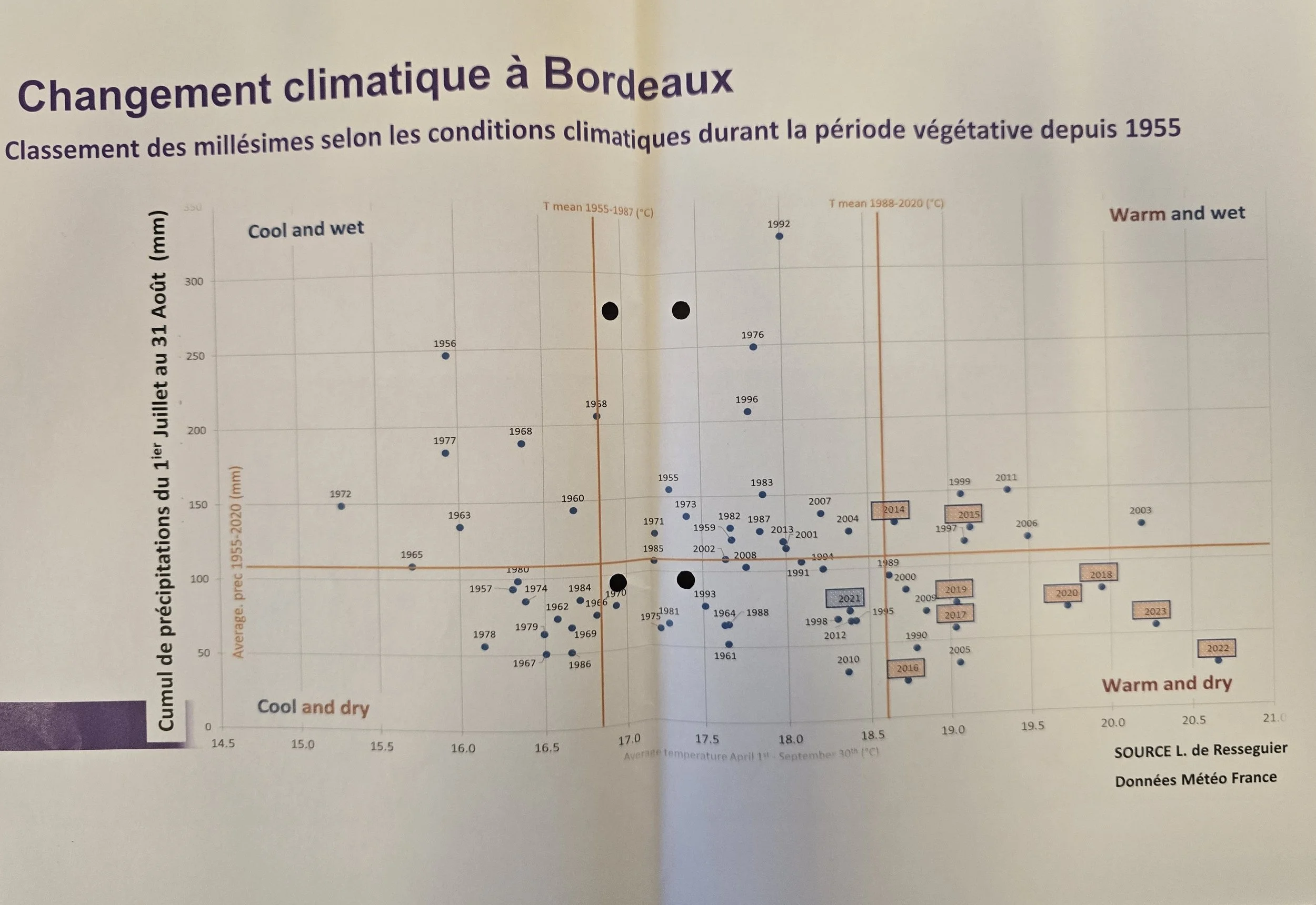
The current arid conditions in the Gironde underscore a key point: climate change is not simply a matter of rising temperatures, although warming is certainly a major component. During the grape-growing season, from spring through late summer, Bordeaux is warming roughly twice as fast as the global average. While the planet as a whole has reportedly warmed by approximately 1.1°C to 1.2°C (2°F) since the mid-twentieth century, Bordeaux’s warm-season temperatures are believed by some wine professionals in the region to have risen twice as much, by an average of about 2.5°C (4.5°F) over the same period. This is an extraordinary climatic shift. Grape growing and winemaking cannot remain unchanged without equally significant changes in the character of the region’s wines.
Source: La Maison du Vin de Margaux
The challenge for Bordeaux’s winemakers in producing great wines is not limited to temperature rise. They must also contend with greater spring-frost risk, more frequent and intense hailstorms, altered rainfall patterns and a changing biological community. The pressures arise on many fronts and addressing them requires changes throughout the vineyard and winery.
Bordeaux is not responding to climate change through one revolutionary solution, but through a multitude of adjustments, in plant material, vineyard architecture, harvest decisions, winemaking and winery design. All these are intended to preserve freshness, balance and regional identity under climatic conditions quite different from those in which Bordeaux’s traditions developed. Note that this article focuses primarily on red wines, but much of the commentary is equally applicable to whites.
EFFECTS OF HIGHER TEMPERATURES ON GRAPES
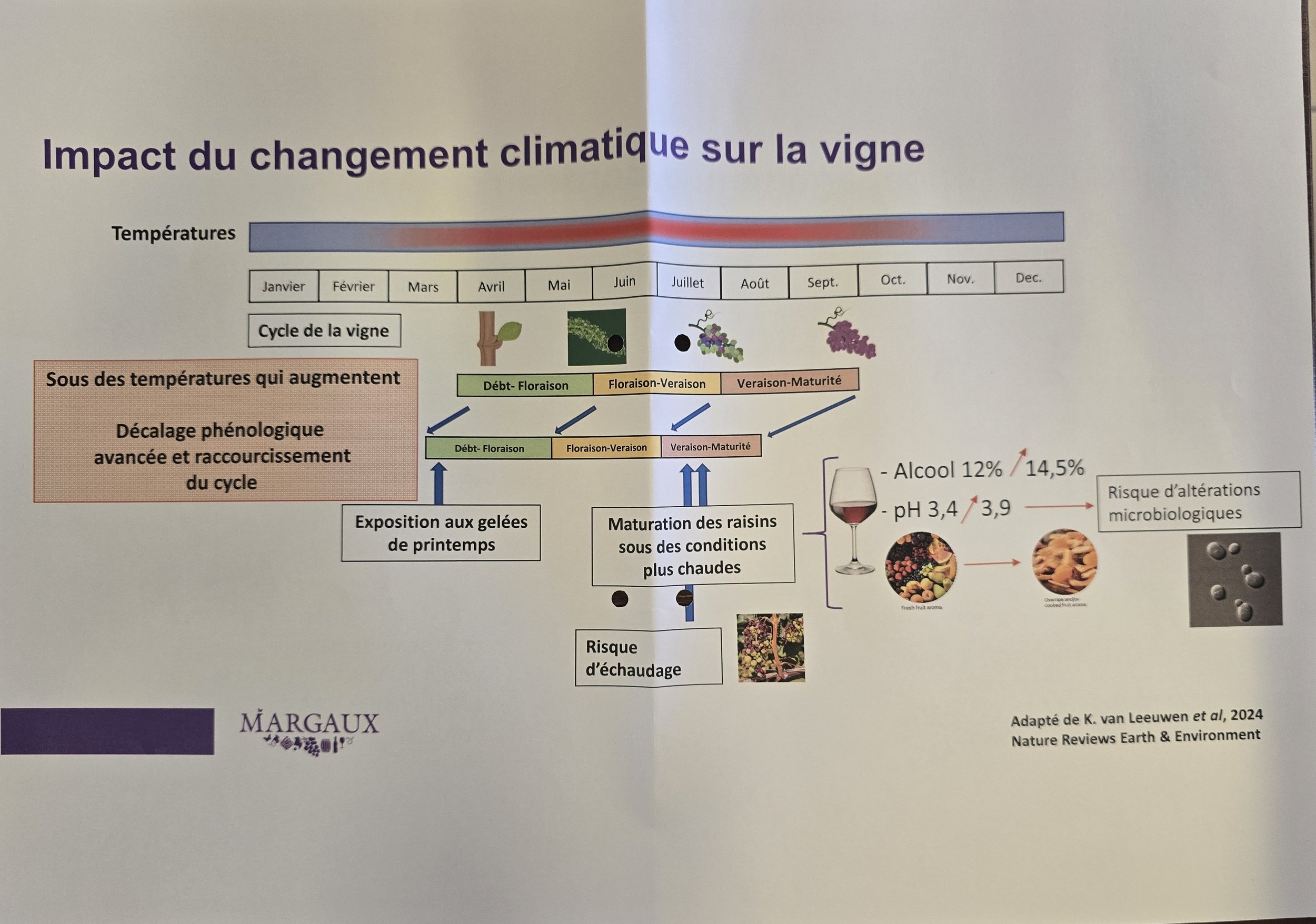
The effect most people associate with climate change is greater heat. Scientists increasingly use the broader term “climate change” because rising temperatures are only one consequence of increased greenhouse-gas concentrations in our atmosphere. In Bordeaux, however, the degree of warming has had particularly direct effects on grape development. Among the most important are:
Greater sugar accumulation during ripening, leading to higher alcohol levels in the finished wine.
Lower acidity. Without delving too deeply into grape metabolism, warmer days and nights accelerate the loss of malic acid, one of the principal sources of tartness and freshness in wine.
Earlier bud burst, which exposes tender young growth to potentially lethal spring frosts. It is one of climate change’s apparent contradictions: a warmer climate can increase the risk of cold damage.
Source: La Maison du Vin de Margaux
Greater sugar accumulation is not entirely negative from the perspective of wine quality. Bordeaux wines, particularly those with a high proportion of Cabernet Sauvignon, once often relied on chaptalization, the addition of sugar to unfermented juice or “must,” to achieve adequate alcohol levels. Chaptalization has not been permitted in Bordeaux since 2014, nor is it really needed today. Merlot-dominant wines, such as those from Pomerol and Saint-Émilion, now commonly exceed 14.5% alcohol, and levels of 15.5% are no longer unheard of. Cabernet Sauvignon ripens later and generally accumulates sugar less readily than Merlot, yet even Cabernet-dominant Médoc wines now commonly reach 13.5% alcohol naturally. The issue is no longer insufficient sugar content; it’s excess.
Acidity has changed just as significantly. The pH of Médoc red wines has risen from averaging 3.4–3.5 in the 1990s to closer to 3.9 today. That may sound like a modest shift, but pH is logarithmic: a wine at pH 3.4 has approximately 2.5 times the hydrogen-ion concentration of one at pH 3.9. The sensory consequences can be substantial: higher-pH wine may taste flabby, softer and less fresh, and may feel unbalanced if other elements do not provide sufficient lift. Sulfur dioxide, the anti-bacterial of choice in winemaking, also becomes less effective as pH rises, making rigorous winery hygiene increasingly important.
ALCOHOL AND ACIDITY: TOO MUCH MERLOT?
Bordeaux winemakers are, to a varying extent, shifting away from Merlot, a grape that can generate very high sugar concentrations at ripening, leading directly to high alcohol in the finished wine. Although Merlot still accounts for roughly 66% of the Bordeaux region’s vineyard acreage, the picture is not uniform, and it is changing, especially at Grands Crus châteaux. Merlot’s ability to develop high sugar content within a relatively short ripening season was once regarded as a strength. Now, though, the high sugar at harvest and the resulting high alcohol content in the finished wine is not so highly prized.
The Médoc’s Grands Crus Classés have long planted more Cabernet Sauvignon than Merlot because their gravelly soils are particularly well suited to the variety, and because Cabernet Sauvignon has flavors and aromas that are very highly valued in the world market. And according to Phillippe Reich of Château l'Argenteyre, as quoted by Gilbert & Galliard, “The threat to Cabernet Sauvignon is not from global warming. Quite the contrary – it allows it to fully ripen at the end of the harvest season, which was often lacking two decades ago.” We could therefore expect the predominance of Cabernet Sauvignon in the Médoc to rise even further in the future, especially at Grands Crus properties at which the terroir is favorable.
Petit Verdot is also receiving renewed attention. Historically used in many Bordeaux blends, it was often regarded as the “pain in the neck” grape of the region because it struggled to ripen in cooler years. A longer, warmer growing season has made it more dependable on the Left Bank, and it is now appearing at some Right Bank estates as well. Petit Verdot contributes acidity, color and tannic structure, qualities that can help counterbalance increasingly ripe, soft Merlot.
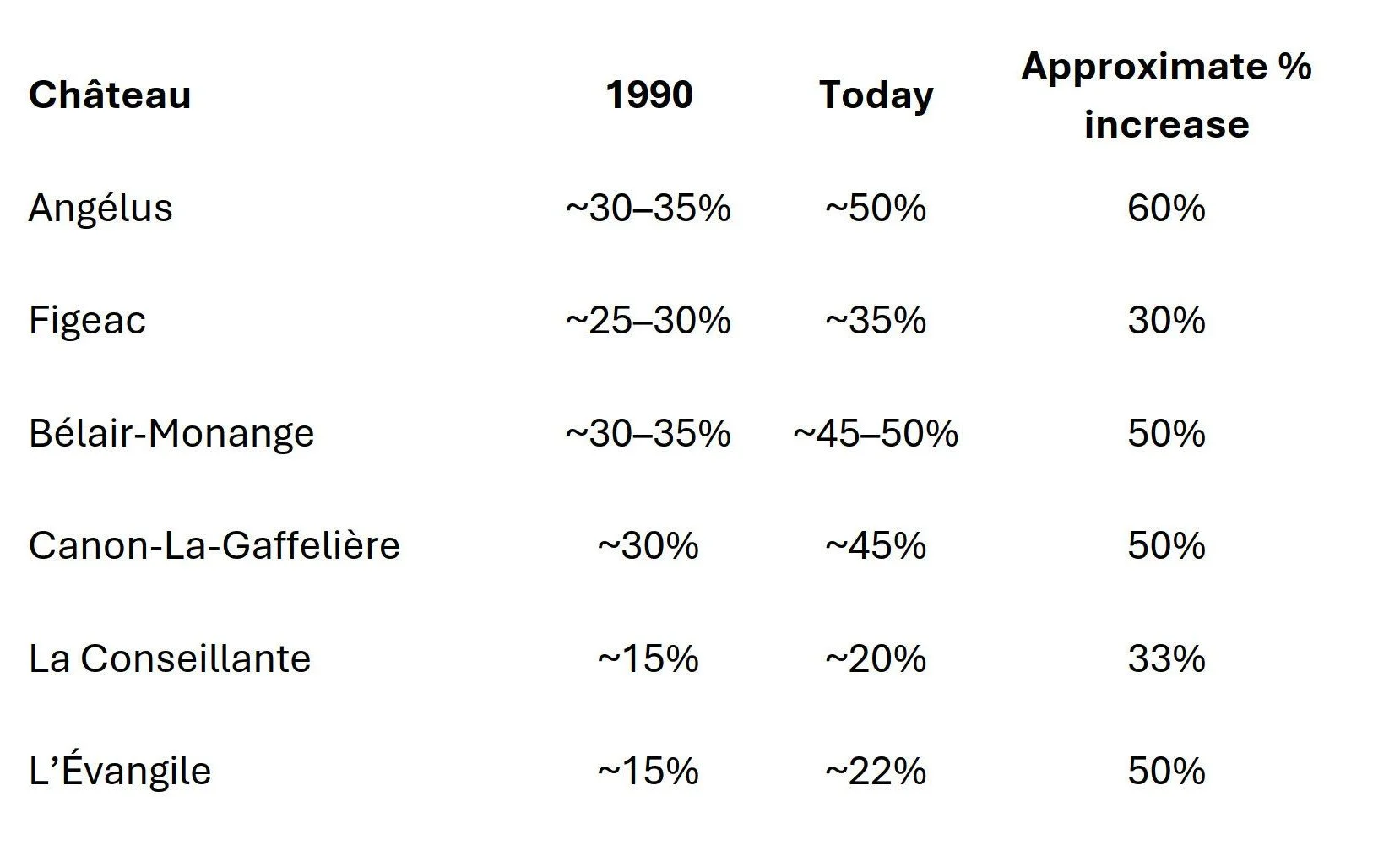
Cabernet Franc has long played a similar role on the Right Bank, bringing acidic and aromatic lift, freshness and tannic structure to Merlot-based wines. However, its popularity among winegrowers was historically limited by its limited ripening potential in cooler weather. As reported by The Wine Cellar Insider, Decanter and TerroirSense, its reported share of plantings has increased at a number of leading estates:
Various sources
These changes reflect a broad effort to retain freshness, structure and balance at Grands Crus properties, as Merlot ripens earlier and reaches higher potential alcohol. However, Merlot still remains the dominant grape in most red Cru Bourgeois wines and red wines from the less prestigious appellations in Bordeaux.
ADDRESSING FROST
How are agronomists and vineyard managers responding to greater frost risk? Several approaches are used:
Late pruning or double pruning. These techniques preserve apical buds as a temporary, sacrificial growth point, delaying budbreak in the basal buds (near the base of the canes) that will ultimately carry the crop. If frost arrives early, the later-developing basal shoots may escape damage.
Delayed tillage. Leaving the soil compact and relatively bare allows it to absorb more heat during the day and release some of that warmth toward the vines overnight.
Wind machines to combat radiation frost, which develops on cold, clear and still nights when warm air remains above a layer of colder air near the ground.
Hedges and trees positioned to reduce exposure to advective frost, which occurs when a mass of cold air moves through the vineyard carried by the wind.
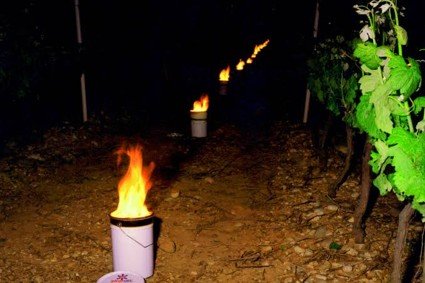
Specialized vineyard candles or burners that add heat to the surrounding air.
Source: Stop Gel (stopgel.fr)
MANAGING HEAT AND DROUGHT IN THE VINEYARD
Different châteaux face different challenges in managing heat and drought, depending on factors such as vineyard row orientation, slope and exposure to morning or afternoon sun, soil composition, depth to the water table, and water-holding capacity. Bordeaux growers have responded with a range of vineyard practices tailored to these differing conditions.
You may also have heard about new grape varieties having been approved for use in both red and white Bordeaux wines. These present an opportunity for the future, but currently any plots of such new varieties are being used at highly valued châteaux only for experimentation, and early reports are not especially encouraging regarding their use. Only growers in the generic Bordeaux/Bordeaux Supérieur appellations are permitted to employ the new varietals in finished wines.
Selective leaf removal
This practice has long been employed during the growing season to expose grape bunches to sunlight and promote ripening. In hot, dry conditions, however, the canopy may thin naturally because of water stress, and accelerating ripening is no longer always desirable. Maintaining sufficient foliage to shade the grape bunches can help protect them from sunburn and excessive heat. Some vineyards are also allowing the canopy to grow higher, providing additional leaf area and greater shading potential.
Green harvesting
This practice, which comprises the removal of unripe grape clusters so that the vine can devote its resources to ripening the remaining fruit – may also be used less frequently. Historically, the practice helped ensure that a limited number of clusters could reach full maturity. Warmer conditions now make ripening easier in many vintages, while extreme heat may cause some berries or entire clusters to shrivel and dry. In such circumstances, further crop reduction may be unnecessary or even counterproductive. When heat stress becomes evident, some châteaux, including Château Paveil de Luze in Margaux, reposition exposed grape clusters toward the side of the canopy facing away from the afternoon sun. In fact, David de Luze of the property informed us that in 2026, nature has done the green harvesting for them.
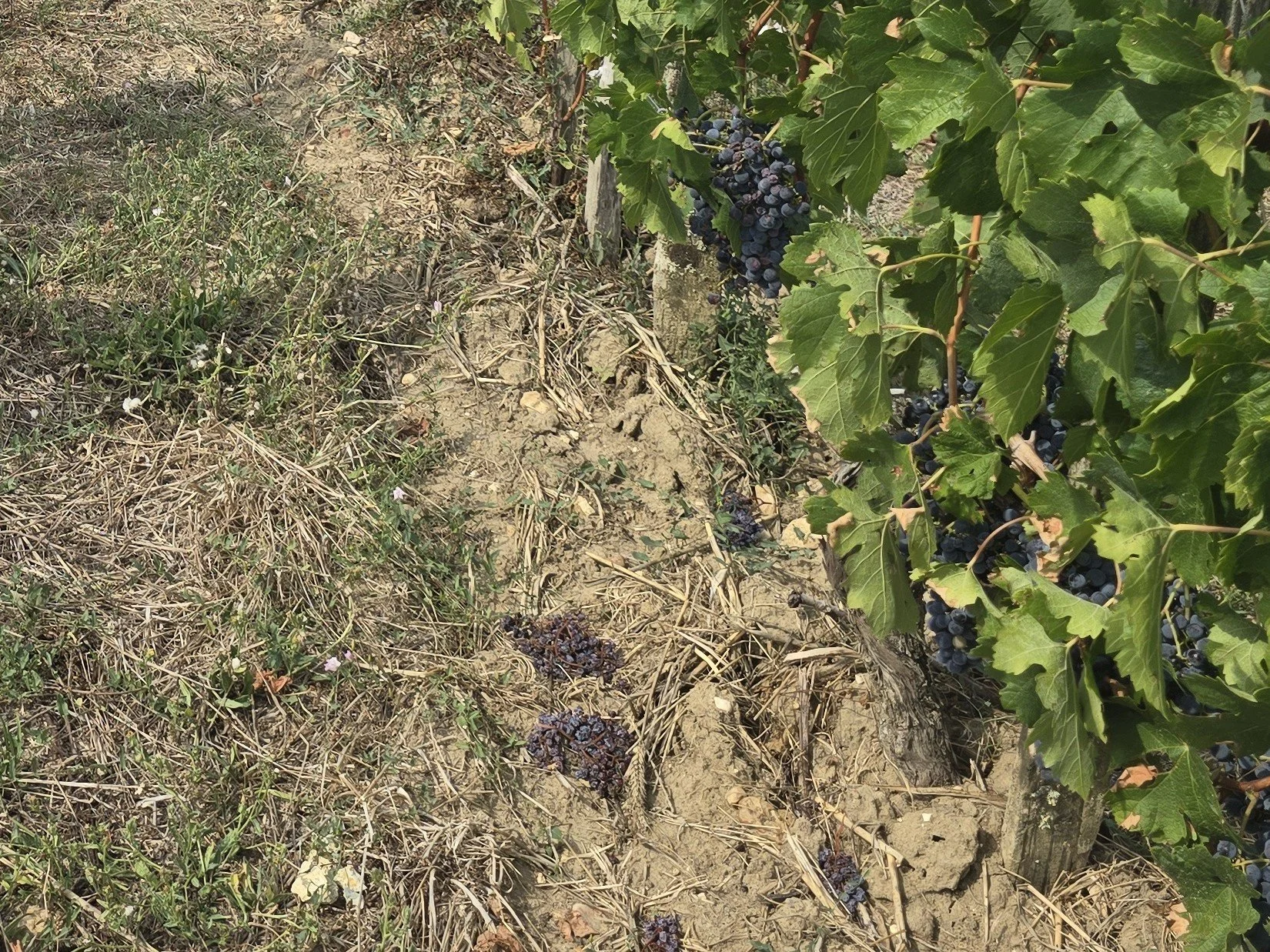
Fruit drop resulting from drought conditions
Tressage
As vines grow during the season, arborists typically employ manual or mechanized trimming of new growth to maintain the desired plant height and redirect plant energy to the fruit and away from vegetative growth and vigor. International Wine Challenge mentions the uniformity of trimming and dimensions commonly employed in vineyards of the region resulting from the practice, known as rognage. But a few prestigious estates such as Château Palmer in Margaux now employ a more labor-intensive practice intended to moderate ripening, protect grape acidity and improve drought resistance: tressage. This practice comprises the labor-intensive manual braiding of vine growth when shoots exceed a target length. This is a very expensive process, and it likely will never be widely practiced except at Grands Crus properties where the high price of the wine can support it. But is offers an interesting approach that may help maintain historical virtues in the finished wine such as bright acidity and restrained alcohol percentage.
Tressaged vines at Palmer
Row reorientation
Château Margaux has also reportedly begun reorienting some vineyard rows from East–West to North–South to reduce afternoon sunburn and heat stress. A north–south orientation can distribute sunlight more evenly between the two sides of the canopy and provide additional shade, helping to preserve acidity, aromatics, and phenolic balance as the climate warms. Row orientation is, of course, a very long-term adaptation, possible primarily when vineyards are replanted. It is worth noting that many Médoc classified-growth vineyards already have rows oriented North–South.
Cover crops
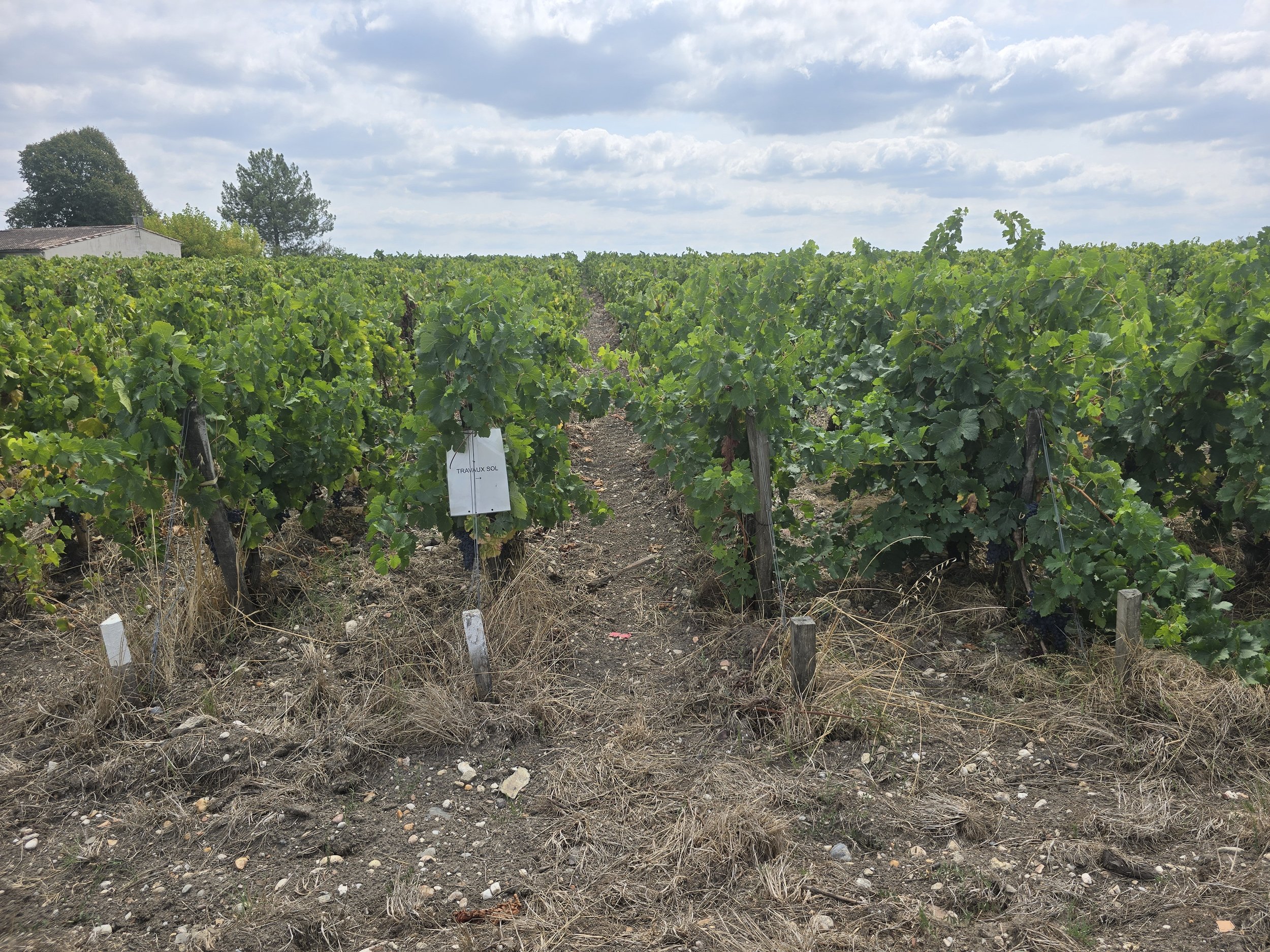
Grasses, legumes and broad-leafed brassicas such as radish and mustard are increasingly planted between vine rows and in areas adjacent to them. They can promote biodiversity, add organic matter to the soil, improve soil structure, and influence water availability. Note that the use of the word “crop” does not imply harvest of a second produce within the vineyard. In most cases, the cover crop is incorporated as compost or used as so-called green manure to aid in fertilizing the vine rows.
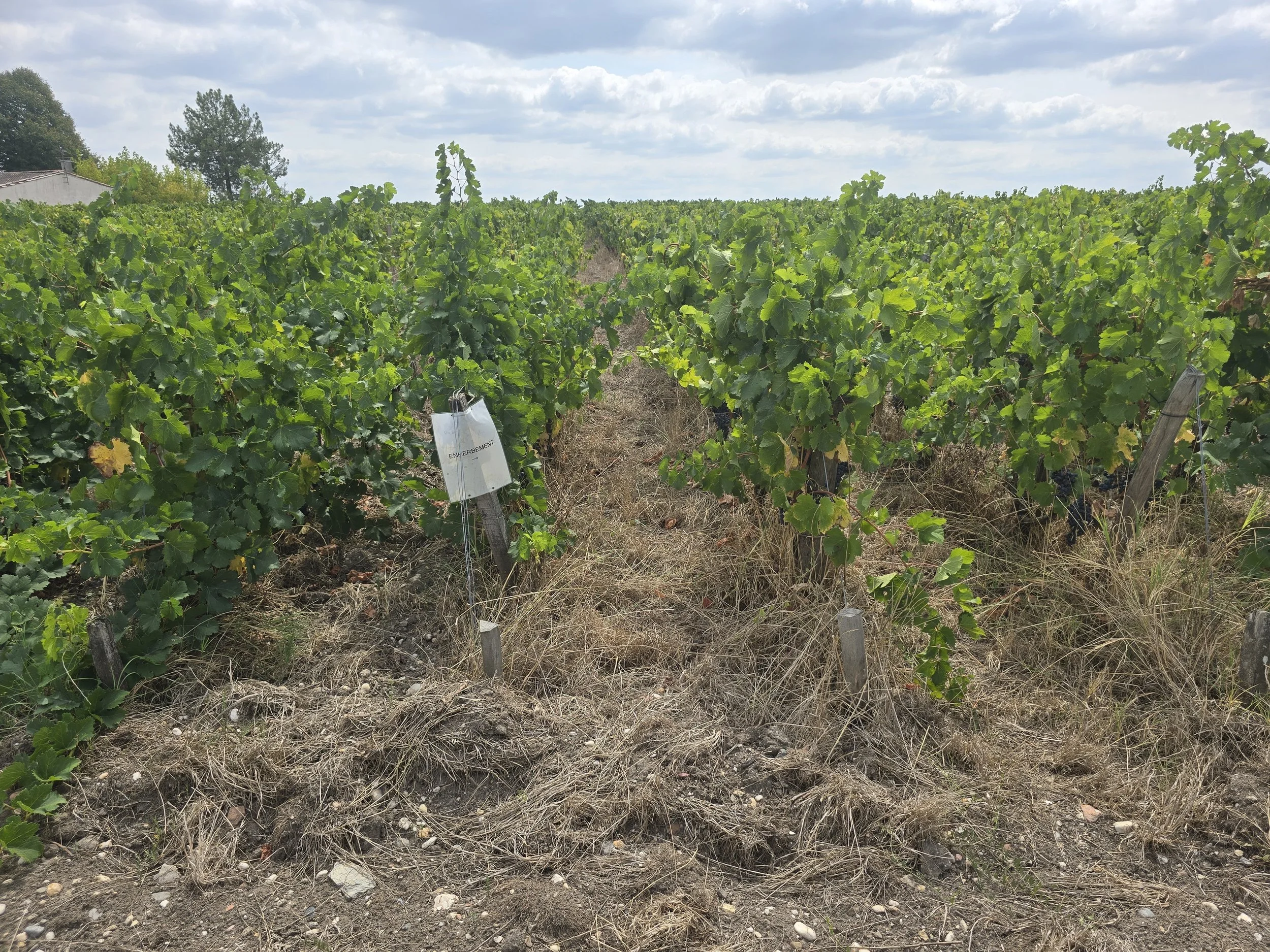
Cover crops at Palmer
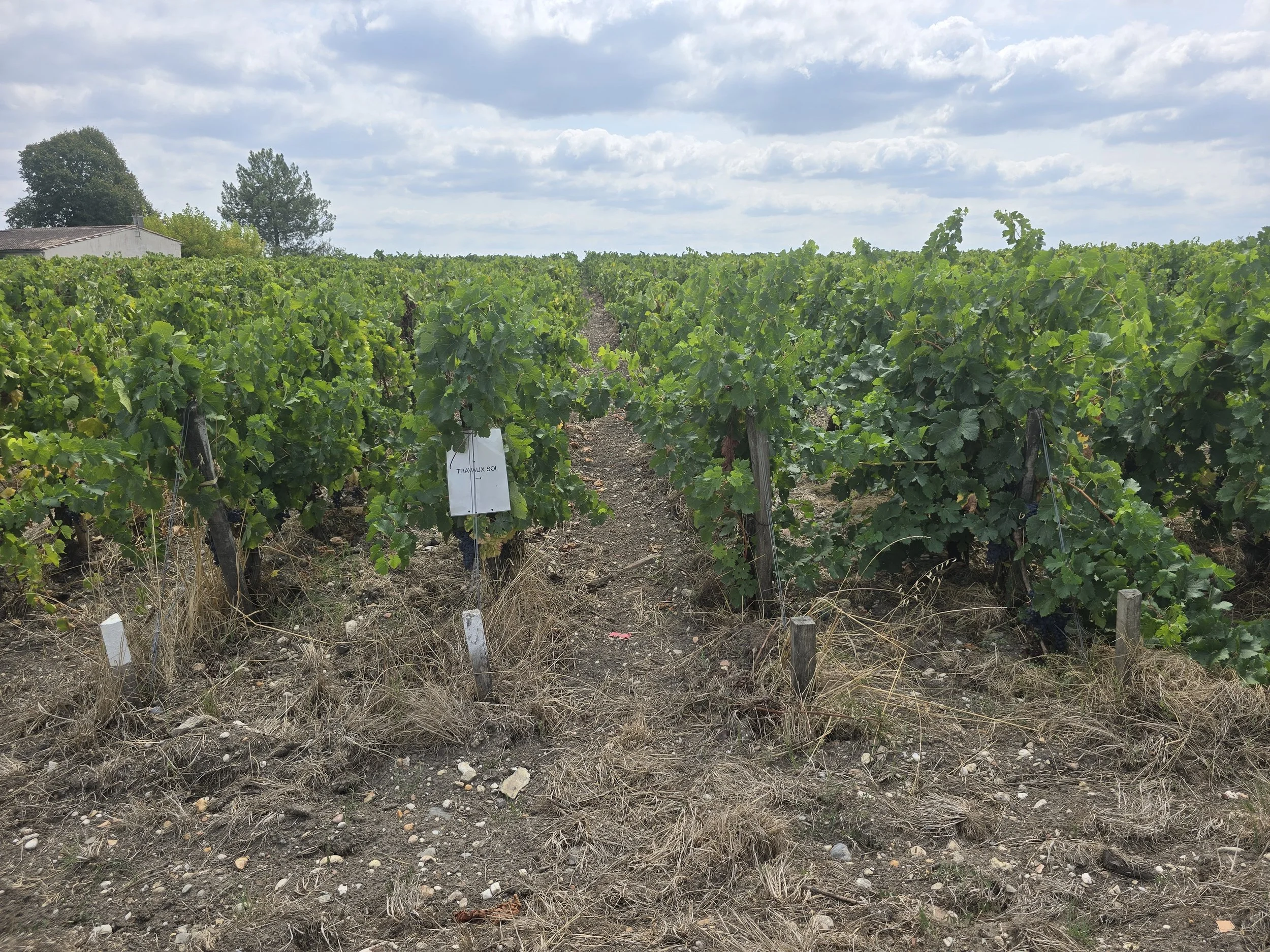
Alternating cropped rows and bare soil at Palmer
Estates with relatively high water tables, including some low-lying properties in Margaux and vineyards near the Gironde estuary, may use grasses and shallow-rooted cover crops to compete with the vines, restrain vegetative vigor, and help manage excess moisture. Drier, better-drained estates may instead favor legumes, deep-rooted brassicas such as mustard and radish, and diverse cover-crop mixtures intended to increase soil organic matter and improve water retention. Cover-crop strategy is therefore shaped largely by drainage, soil type, and water-table depth. Whatever its property-specific purpose, it is becoming an increasingly important vineyard-management tool, for reasons largely shaped by climate change.
Rootstock selection
Rootstock selection is another area in which climate change is having a profound effect. Bordeaux vines are, with few exceptions, grafted onto rootstocks derived from American grape species because of their resistance to phylloxera. These rootstocks differ significantly in rooting depth, vigor, drought tolerance, and their influence on the timing of vine development and grape ripening.
Rootstocks with Vitis riparia species parentage were historically favored in many circumstances, but growers are increasingly employing crosses involving Vitis berlandieri and Vitis rupestris species. Many Bordeaux estates are moving toward drought-tolerant rootstocks capable of developing deeper root systems and delaying vine development and ripening. These characteristics can help vines withstand heat and water stress, slow sugar accumulation, preserve acidity, and support the larger canopies needed to provide shade.
NEW APPROACHES TO VINEYARD ECOLOGY
Perhaps the most interesting technique being explored to assist in managing the diverse threats posed to vineyards by climate change is the planting of trees within the vineyard rows and hedge rows around vineyard blocks. Additional ecologically based approaches are also increasingly being employed as adjuncts. These approaches are not being employed solely to address climate change, but it is a major driving force in winemakers’ increasing new awareness of the interconnectedness of a variety of natural factors in vineyard health in the modern age.
Various terms are used to describe these practices: vitiforestry, agroecology, agroforestry, polyculture and the joualle method (the last two, especially, when additional non-grape crops are added). The luxury-products giant LVMH, which owns both Château Cheval Blanc in Saint-Émilion and Joseph Phelps in Napa, is documented as being an early pioneer at both properties in the introduction of trees within the vineyard rows themselves, along with other ecology-derived practices. And the practice is spreading; diverse additional Châteaux including Soutard (St-Émilion), Larrivet-Haut-Brion and Haut-Bailly (Pessac-Léognan) and Palmer (Margaux), among others, are all employing some level of vitiforestry, with each property employing its own particular implementation.
Of all the Bordeaux viticultural implementations, Cheval Blanc is perhaps the most ambitious, while Palmer’s is likely the most wide-ranging; the Regenerative Viticulture Foundation reports that Palmer is using livestock (horse, sheep, cattle) in the vineyard to aid in soil management, mowing of inter-row grasses, and providing natural fertilizer. These animals’ work augments that of human farm workers and machinery, reducing the carbon footprint exerted by winery operations.
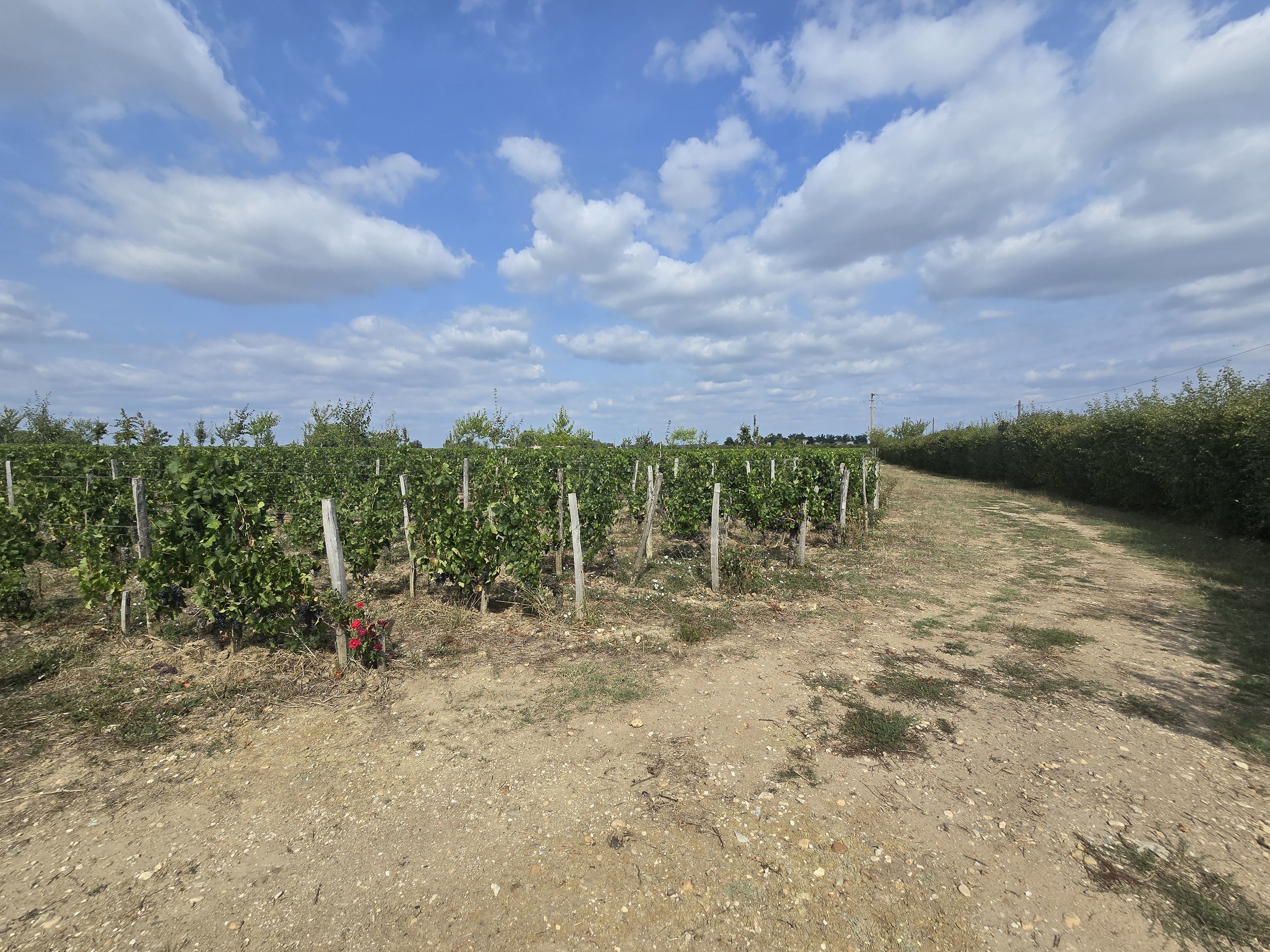
Trees within vine rows and perimeter hedges at Cheval Blanc
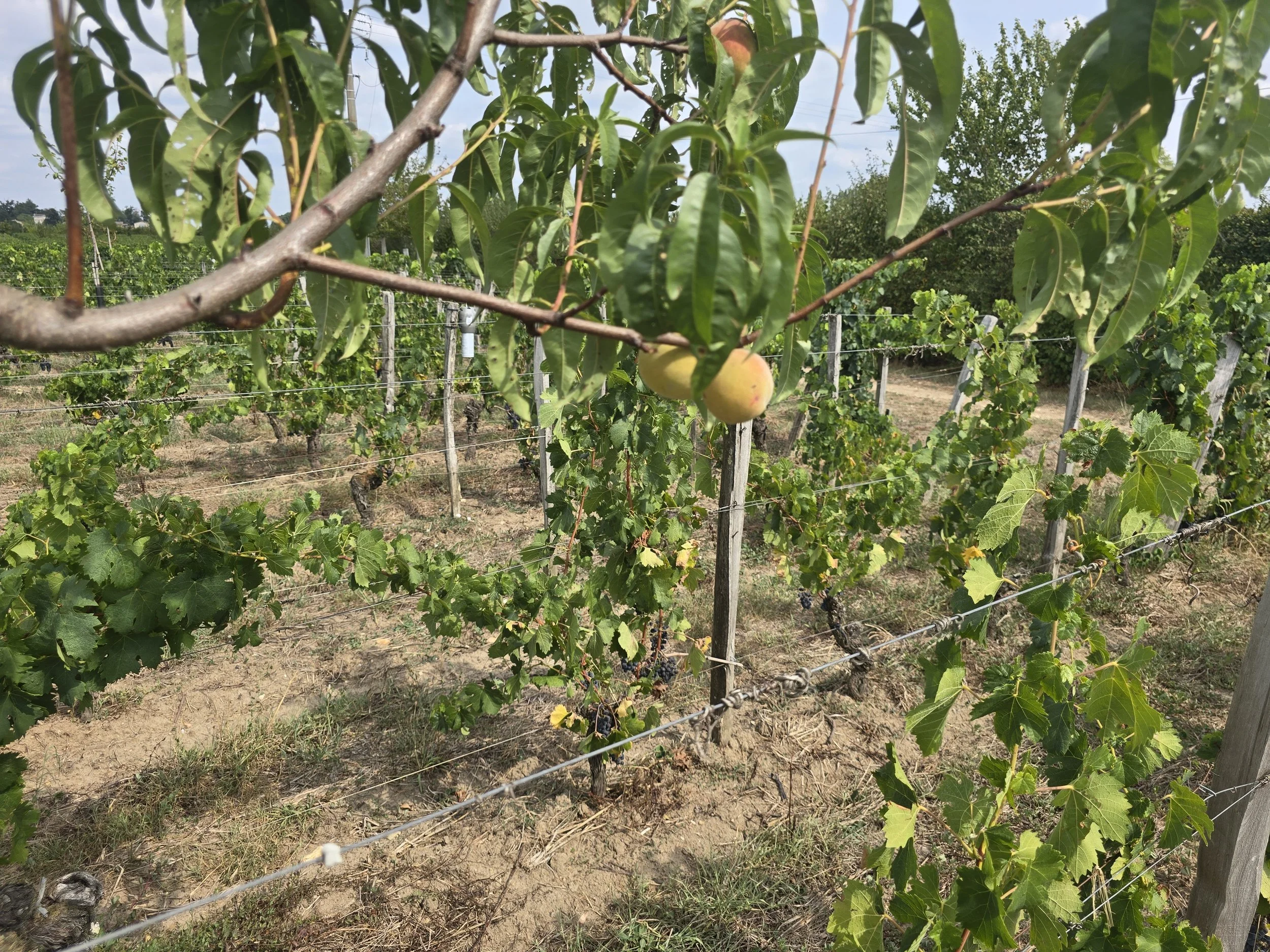
Peaches in the Cheval Blanc vineyard
CHANGES IN THE VAT ROOM
Lowering the carbon footprint
Bordeaux winemakers are more aware and focused on climate change than the public at large. After all, their livelihood depends on their recognizing and addressing the challenge. So, in addition to the changes in agronomy and vineyard practices discussed above, several châteaux have taken bold steps to reduce their carbon footprint. Two notable examples are Château Cantenac Brown in Margaux and Château Haut-Bailly in Pessac-Léognan. The approaches taken by these two estates are quite different, but equally impressive.
Cantenac Brown: the zero-energy cellar. The facilities at Cantenac Brown are fascinating, and not only for the eco-sensitive design of the new cellar. The château’s chartreuse, or original residence building, is best described as a manor house of Tudor design, resembling something one might encounter deep in the Scottish Highlands rather than in the Médoc. But the new cellar building, constructed in 2024, is one of the most audacious efforts I have ever seen from an energy conservation standpoint. Its walls are constructed of rammed earth, one-meter in thickness, which provides both exceptional insulation and a measure of natural humidity control. Cooling of the interior of the cellar is provided by a geothermal air-to-ground heat exchanger, eliminating the need for conventional electric air conditioning. I visited the château on a blazing hot day during one of the five canicules or heat domes we’ve had this summer, and the temperature within the cellar remained a very comfortable 57 F (14 C) that is perfect for the long-term aging of wines in oak barrels for the Grand Cru wine this property produces.
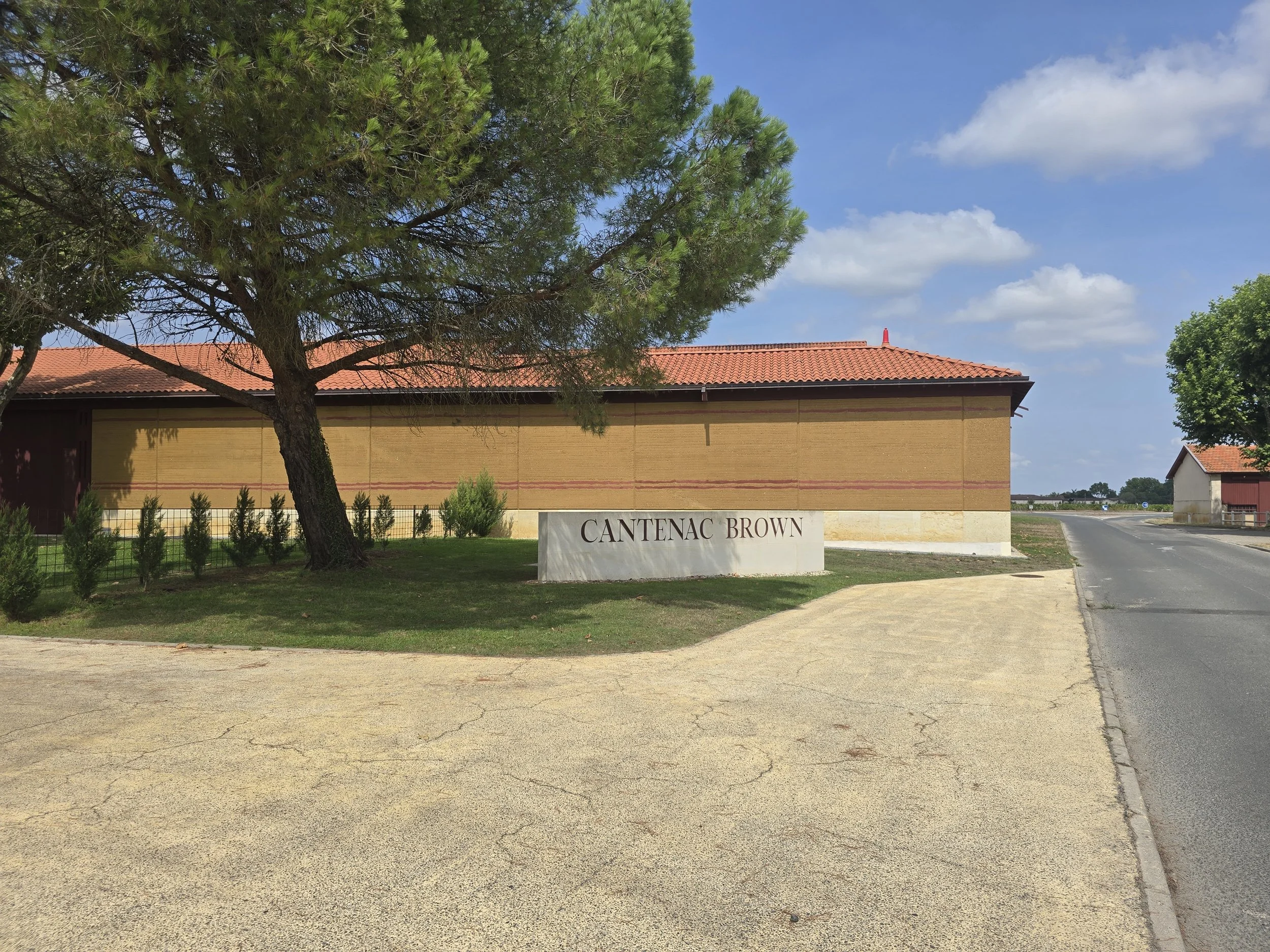
Cantenac Brown’s revolutionary zero-footprint chai
Haut-Bailly: the earthen cellar. At Château Haut Bailly, the architectural approach was different: incorporate the earth into the aesthetic design to provide superb insulation and integration into the natural environment.
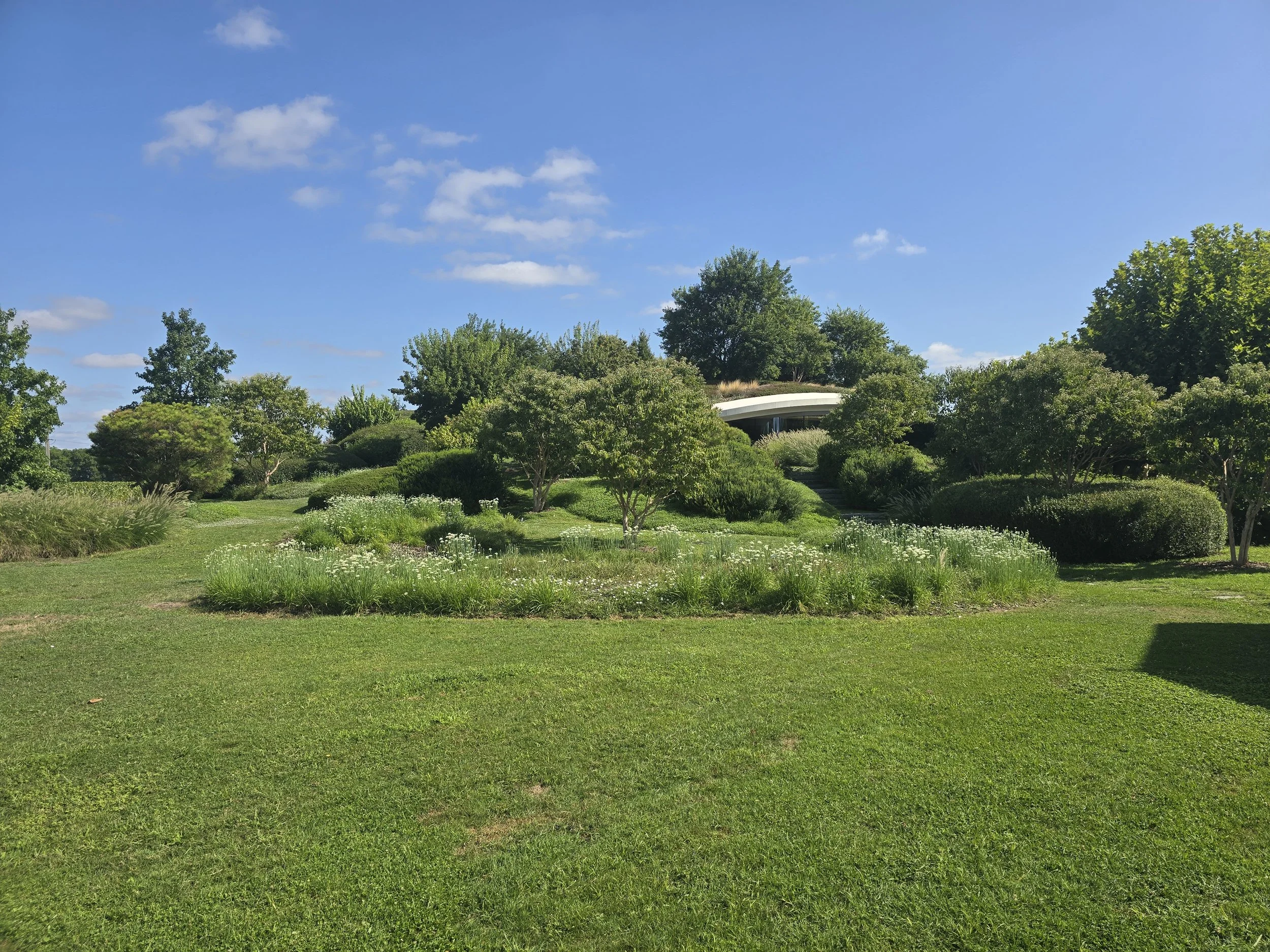
The dramatic silhouette of the new cellar at Haut-Bailly provides an earthen shroud within which a very modern new winemaking operation resides. The gentle curves of the earthwork and the structure beneath facilitate gravity handling of grapes from sorting through fermentation; gravity processes help protect grapes that may suffer from climate-induced fragility and allow them to still produce great wine. A recent tasting of the château’s wines provided an eloquent confirmation that this approach is extremely successful.
Changes in vinification
In addition to the kind of carbon-sensitive design and operation typified by Cantenac Brown and Haut-Bailly, many châteaux have modified their vinification methodology to moderate the potential effects of higher grape sugars, lower natural acidity and weather-damaged grapes. The increasing use of gravity flows for grapes from sorting through fermentation, discussed briefly above as practiced at Haut-Bailly, is one of these changes.
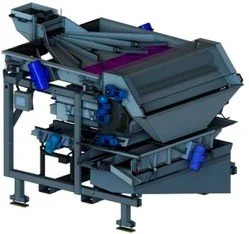
Sorting of grapes is really the first post-harvest activity to have a profound impact on quality of the finished wine. Before 1990, grapes were sorted almost entirely in the harvest fields, with bad bunches left in the vineyard while a bunch with mostly good fruit made its way to the fermentation tanks. Starting in about 1990, visual sorting tables began to appear regularly at the front end of the vat room, and then sorting using laser-based image analysis to remove unsuitable fruit. Today, a newer approach is gaining increased acceptance by winemakers, one based on density measurement. Destemmed fruit is placed into a vat of sugar solution at the desired density, allowing unripe or overripe fruits and MOG (material other than grapes such as leaves, insects and stem fragments) to either sink or float. This approach is thought by many winemakers such as Château Angelus, the great Saint-Émilion grand cru estate, to have improved the fruit entering winemaking in difficult vintages such as 2024.
Fermentation temperature control
Precise fermentation temperatures are increasingly valued today, with concerns resulting from higher grape temperatures coming into the vat room from the vineyards than were common in the past. One of the serious concerns is that excessive temperatures (above 35 C) can shut down fermentation and kill yeasts; even if yeasts survive, these temperatures can lead to bacterial spoilage. Consequently, the ability to cool the must (fermenting wine) using cooling water jacketing or coils is critically important to prevent such loss of quality or of the entire product. Stainless steel, concrete and terra cotta vessels allow tighter control of the fermenting must, and consequently are in much broader use today than oak vessels for fermentation.
CONCLUSION
Response to climate change, it should be evident, does not involve a single action at every château, the same approach at all properties, or even application of most of the above approaches at any single property. Grands Crus in the Médoc, Saint-Émilion and Pessac-Léognan have been trailblazers that other winemakers in the region gratefully follow in a variety of ways. As David de Luze emphasizes, the Crus Bourgeois and non-classified winemakers in Bordeaux do not have the resources to experiment and install unproven, innovative technologies in the way the well-funded Grand Cru châteaux do. It is important that the greatest properties in the region share their experiences with others, and thankfully they do.
Response to climate change requires a balance between competition and cooperation among producers that has long been characteristic of Bordeaux. This collaboration will help Bordeaux continue to produce some of the most prized wines in the world, and the lessons learned here will also inform winemakers around the globe.
SOURCES AND REFERENCES
Thanks to the many individuals who assisted by sharing their time and providing invaluable information and insights, notably David de Luze of Château Paveil de Luze, Guillaume Castel of Château Cantenac Brown, Hope Gee of Château Soutard, and Emilie Fabre, Head of the Margaux Winegrowers' Union.
ABOUT THE AUTHOR
Jeff Hullinger is a Bordeaux‑based wine guide and writer holding the WSET Level 3 Award in Wines, with Distinction. His work focuses on the region’s evolving viticulture and the people shaping its future. He is available for freelance wine writing, editorial features, and technical and trade assignments. He can be reached at jeff@bordeauxamericain.com .
